

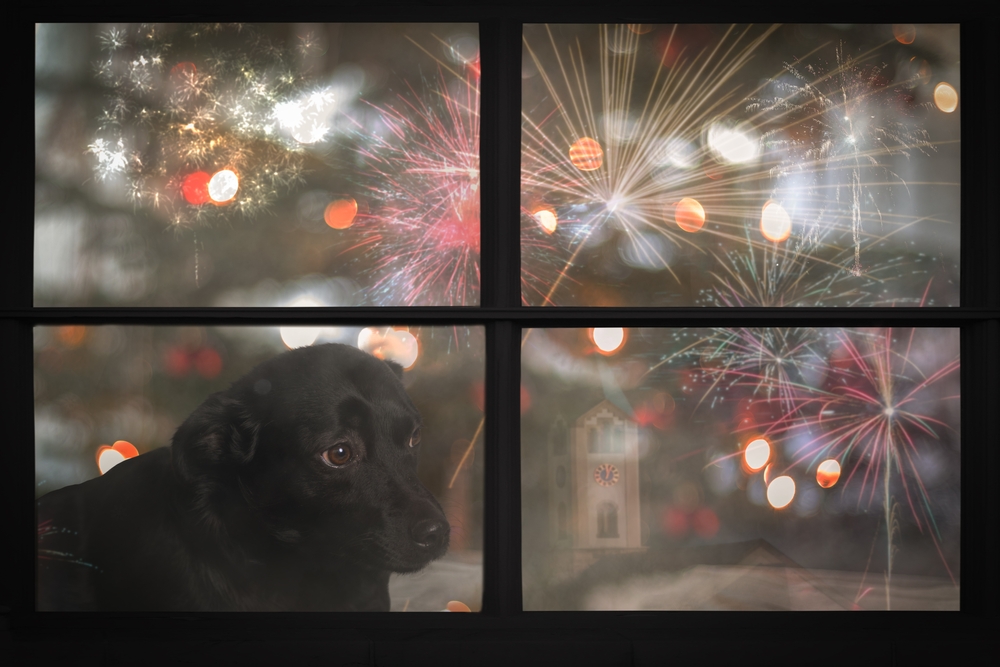
You know that look. Your dog hears the first distant boom of fireworks, or the rumble of a thunderhead rolling in over Tampa Bay, and suddenly they’re a different animal: panting, pacing, glued to your leg, or trying to wedge themselves into the smallest space in the house. They’re not being dramatic. They’re scared, and without a real plan that fear tends to get worse year over year rather than better.
The good news is there’s a lot you can do, from setting up a calm retreat at home to working with your vet on medication when the fear is severe. And for the nights when even the best home setup isn’t enough, our soundproofed boarding suites at The Wagging Club give noise-phobic dogs a genuinely quieter place to ride out the worst of fireworks season, storm season, or any time they’d otherwise spend the night panicking at home. If you want to talk through what might work for your dog, reach out and we’ll find the right fit.
Noise Phobia at a Glance
- It’s more than a startle. Noise phobia is an extreme, persistent fear response, not a normal reaction.
- Tampa’s calendar is tough. Storm season and Fourth of July fireworks stack into the hardest months.
- Most dogs improve with a plan. A safe retreat, calm environment, and gradual desensitization help, with veterinary support for severe cases.
- Quiet environments matter. Soundproofed boarding makes a real difference for dogs who’d otherwise spend stressful nights at home.
What Triggers Noise Phobia, and How Does It Develop?
Noise phobia is an extreme, persistent fear that’s out of proportion to any real danger, and it’s one of the most common and under-treated behavior issues in dogs. A handful of things influence whether a dog develops it: genetics and breed predisposition (herding and some working breeds are over-represented), early experiences during the puppy socialization window, a single bad event like a close lightning strike, and medical contributors like ear pain, dental disease, or arthritis that quietly raise the baseline.
A dog who startles at thunder and shakes it off in 30 seconds is showing normal fear. A dog who paces, hides, and stays agitated for hours has crossed into phobia and benefits from a real plan. Noise phobia also tends to travel with separation anxiety and generalized anxiety, so dogs with more than one of these often do best with an integrated approach from their vet.
What Are the Most Common Noise Triggers?
Hearing that’s much sharper than ours means a lot of our background sounds register as foreground events for dogs.
Fireworks
Fireworks are uniquely awful because they pile everything on at once: unpredictable booms, bright flashes, sulfurous smells, and ground vibration. The Fourth of July is the single worst day of the year for lost dogs in the US, with shelter intakes spiking in the days after, and many of those dogs ran from sounds they couldn’t escape. New Year’s Eve is a close second, and in Tampa, neighborhood fireworks usually stretch across a week rather than one night.
The July Fourth pet safety tips come down to the same core moves: bring dogs indoors well before the noise starts, double-check that ID tags and microchip info are current, close windows and curtains, and have a sound-buffered retreat space set up before the first firework goes off. For dogs who can’t relax through fireworks no matter how thoughtfully the home is set up, the conversation shifts toward something more substantial: anti-anxiety medication from your vet, or soundproofed boarding for the worst nights. The most common mistake we see is families hoping their dog will somehow handle it better this year. Fireworks phobia almost always intensifies with repeated exposure rather than fading on its own.
Thunderstorms
Thunderstorms are multi-sensory: thunder, lightning, rain, wind, barometric pressure changes, static electricity, even the smell of rain. Dogs often start reacting 30 minutes before we notice anything. Storm phobia is harder to treat than other noise fears because you can’t replicate the full sensory experience for desensitization training. Tampa’s spring and summer storm season is especially rough because the afternoon thunderstorms become predictable, and the anticipatory anxiety builds over weeks.
Household Appliances and Everyday Sounds
Vacuums, dishwashers, blenders, garbage disposals, smoke detector chirps, doorbells, hair dryers, lawn equipment, power tools- any of these can be a trigger. Watch body language around these sounds to catch sensitivity early: leaving the room when the appliance turns on, refusing to enter rooms where the sound happens, tense watching, yawning, or lip licking. Catching the pattern early means you can intervene before it becomes a full phobia.
What Are the Signs of Noise Phobia?
| Severity | Signs |
| Mild | Alertness, ear position changes, slight pacing, lip licking or yawning, seeking people |
| Moderate | Trembling, hiding in unusual places, heavy panting or drooling, whining, refusing food, restlessness |
| Severe | Destructive behavior, escape attempts, self-injury, loss of bladder or bowel control, inconsolable panic |
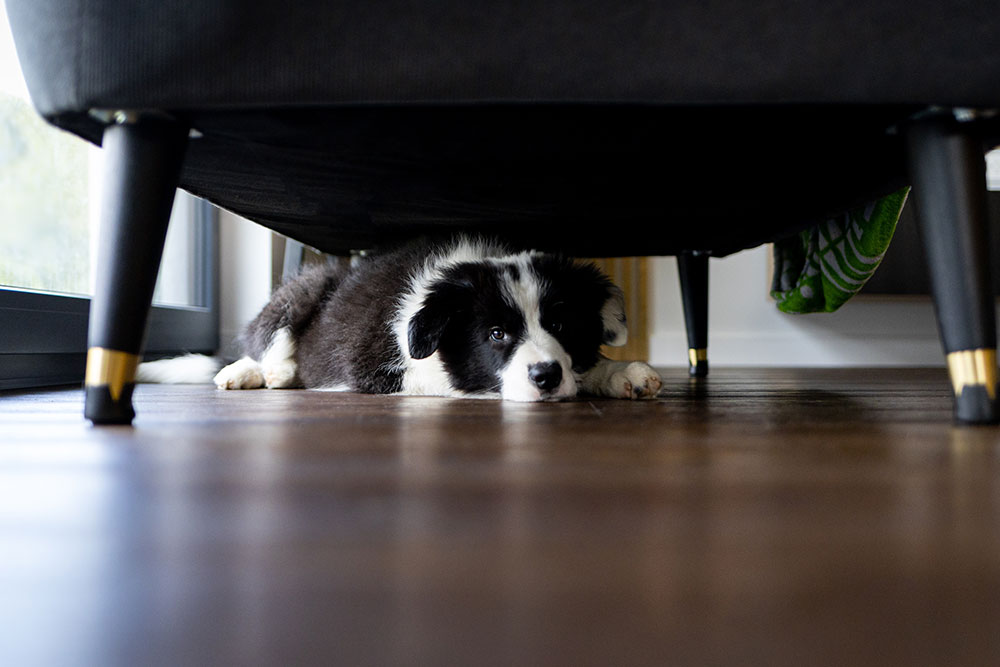
Severe noise phobia is a real welfare issue, not just an inconvenience. Dogs in this state can injure themselves trying to escape, and the cumulative stress wears on quality of life. If your dog is in the moderate-to-severe range, talk to your vet about a comprehensive plan.
How Do You Create a Safe Environment?
For predictable noise events, a few things consistently help:
- Create a safe retreat in an interior room. Bathrooms, closets, and basements have less sound exposure.
- Try noise protection gear to lower the volume of what your dog hears.
- Close curtains and blinds to reduce lightning and fireworks flashes.
- Play white noise or calming music to mask the triggers.
- Set up familiar bedding with comforting scents, like a blanket that smells like you.
- Offer puzzle feeders like a frozen Kong or lick mat for dogs who can engage.
- Stay calm yourself. Dogs read our emotional state.
- Don’t punish anxious behavior, which makes phobia worse. Comforting a frightened pet does not reinforce fear.
- Check windows and doors. A few minutes pet-proofing before a noise event prevents accidental escapes.
Outside the noise events themselves, regular enrichment builds the kind of confidence and resilience that helps dogs handle stress when it shows up. Scent games, food puzzles, training sessions, and sniffaris where your dog sets the pace all pay off when the next storm rolls in.
What Training Solutions Help?
Behavior modification works best when you start it during calm periods, not during active fear events. Systematic desensitization means gradual, controlled exposure to fear-triggering sounds at low volumes, paired with high-value treats or play so the dog’s emotional response shifts from fear to positive anticipation. Start well below the threshold where your dog reacts, pair every exposure with something great, build volume up slowly over weeks, and stop if your dog shows distress. Desensitization works best for predictable, recordable sounds like appliances or doorbells, and is harder for thunderstorms since the full sensory experience can’t be recreated.
Positive reinforcement training also teaches alternative coping behaviors: going to a designated safe spot on cue, settling on a mat for treats, or following a hand target as a distraction. Punishment-based training has no place in noise phobia work- it worsens anxiety and damages the relationship. We offer dog training sessions at The Wagging Club with Amy Weeks, a positive-reinforcement trainer with the credentials to back it up.
What Medications and Supplements Help?
Moderate to severe noise phobia often benefits from medication alongside the behavior work, and your vet is the right partner for this conversation. The categories vets commonly discuss:
- Situational anti-anxiety meds for predictable events: trazodone, gabapentin, dexmedetomidine.
- Daily medications for chronic anxiety, like fluoxetine, sertraline, and other SSRIs.
- Calming supplements like Composure and Zylkene for mild anxiety.
- Pheromone diffusers like Adaptil.
- Pressure wraps like ThunderShirts.
None of these alone is usually enough for severe phobia. The most effective plans combine environment, training, and medication.
Why a Soundproofed Boarding Suite Changes the Picture
For some dogs, the best home setup in the world still isn’t enough. Houses just aren’t built to block fireworks or storms. Walls vibrate, windows transmit sound, and the dog who’s terrified of the booming outside is also picking up the neighbors’ celebrations and the lightning flashes through the curtains. If you’ve spent a Fourth of July with a panting, pacing, inconsolable dog despite doing everything right, you already know what we mean.
That’s the gap our soundproofed boarding suites are built to fill. Sound-dampening construction, a controlled interior environment, and a calm team who knows how to read anxious dogs- the booms and flashes get substantially muted before they ever reach your pup. A dog who’d have spent six hours panting under your bed at home can spend that night in a genuinely quieter room with familiar bedding and a caretaker checking in.
The situations where this tends to matter most:
- The Fourth of July and surrounding nights, when Tampa neighborhood fireworks often run for days
- New Year’s Eve, shorter but just as intense
- Severe storm-season stretches, when the daily afternoon storms have your dog in cumulative anticipatory anxiety
- Major construction or events nearby, including your own kitchen remodel
A dog who isn’t getting repeatedly traumatized by fireworks season has a much better shot at noise phobia stabilizing or improving over time. Spaces fill up early for holiday weekends, so booking ahead is the move if you know your dog will need it.
How Do You Manage Noise Phobia Long-Term?
The best treatment is prevention. Puppies exposed to a variety of sounds in positive, controlled contexts during the critical socialization window of roughly 3 to 14 weeks build resilience that pays off for life. Play household-sound recordings at low volumes during meals or play, build the volume up as the puppy stays relaxed, and never force a frightened puppy to tough it out.
For dogs past the puppy window, the long game is regular vet visits to monitor anxiety and adjust the plan, communication with everyone who handles your dog, and preparation ahead of known triggers like fireworks holidays and storm season. When you’re traveling during a tough stretch, a boarding facility that understands noise-phobic dogs makes a real difference.
Frequently Asked Questions
My dog has always been scared of thunderstorms. Is it too late to help?
Not at all. Even dogs with long-standing noise phobia can improve with a thoughtful plan combining environment, training, and medication from your vet. Progress may be slower than for recent-onset cases, but real improvement is genuinely possible.
Will comforting my scared dog make them more afraid?
Nope. The old advice has been thoroughly debunked. Calm presence and gentle reassurance help anxious dogs settle. The original warning was about not amplifying their anxiety with your own panic, not about avoiding comfort.
My puppy startles at every loud sound. Is this normal or a sign of phobia?
Startling at novel sounds is normal for puppies. What matters is the recovery: a puppy who bounces back quickly and resumes normal behavior is in the healthy range. One who stays agitated, refuses to enter rooms where sounds happened, or shows escalating fear with repeated exposure may benefit from a behavior plan now, before phobia takes hold.
Are some breeds more prone to noise phobia?
Yes. Herding breeds like Border Collies, Australian Shepherds, and German Shepherds, plus some sporting breeds and individual lines within many breeds, show higher rates. Genetic predisposition doesn’t mean inevitable phobia, but it does mean early socialization and proactive management are especially worth doing for at-risk breeds.
Helping Your Dog Find Peace From Noise Phobia
Living with a noise-phobic dog is hard, especially during the months when the triggers stack up. The dogs who keep improving year over year are almost always the ones whose families have a real plan, followed steadily, rather than hoping each event will be the last bad one.
If your dog needs a soundproofed boarding environment for the Fourth, storm season, or any time you’re away from home, contact us and let’s talk through what would work best. Or browse our boarding options, request a service, or meet the team before you arrive.



Leave A Comment