

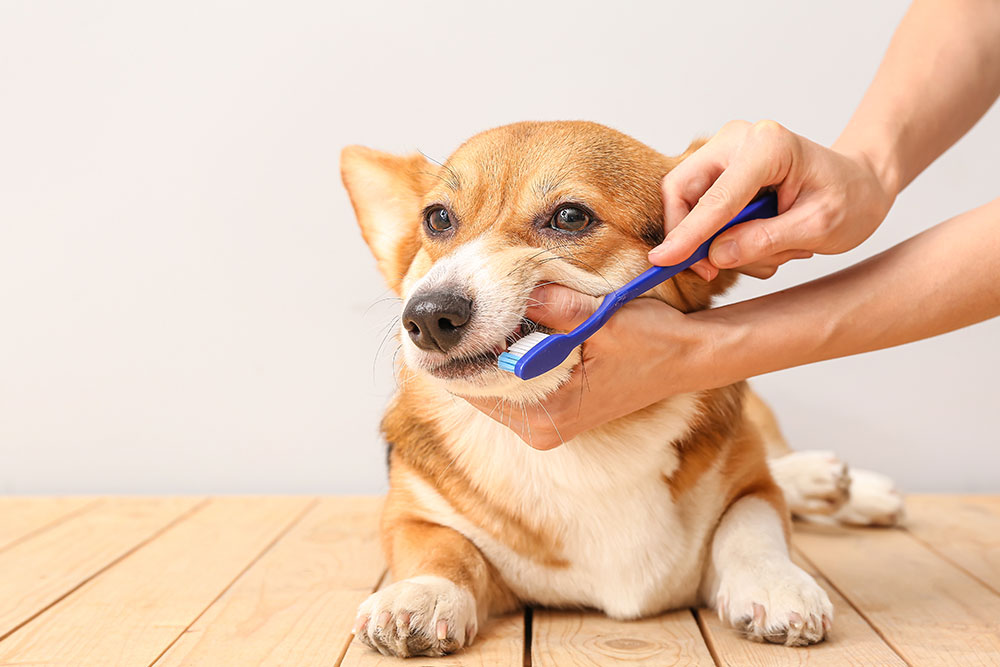
You lean in for a cuddle and your dog exhales directly into your face. It is… not great. That smell does get you wondering, though- should you be doing more for your pet’s dental health? Our own dentists tell us to brush twice a day for two minutes each time. Our dogs have even more teeth than we do, but let’s be honest- brushing every day twice a day isn’t in the cards for most families.
Beyond the breath, there is something more important going on: by age three, most pets already have some degree of dental disease, and the tricky part is that it rarely announces itself until it is well underway. Pets instinctively hide pain, so dental problems can quietly progress from minor plaque buildup to painful infections, loose teeth, and bacteria entering the bloodstream before there is any obvious sign that something is wrong.
The good news is that routine dental care, both at home and through professional cleanings, can prevent most of this from ever happening. At The Wagging Club, we know that keeping your pet healthy goes beyond exercise and nutrition, which is why we offer teeth brushing as an add-on to any daycare, boarding, or grooming reservation. No extra trip required. Call us at 813-692-6655 or contact us to add dental care to your pet’s next visit.
How Does Dental Disease Develop in Dogs and Cats?
Pet dental care gets recommended constantly, but the reasoning behind it is worth understanding. Every time your pet eats, bacteria in the mouth form a sticky film called plaque on the tooth surfaces. Left undisturbed for even a few days, that plaque hardens into tartar, a yellow-brown deposit that brushing alone cannot remove. Tartar irritates the gumline, bacteria work their way below it, and the infection that follows starts destroying the structures that hold teeth in place: the gums, the ligaments, and the bone beneath.
The stages of periodontal disease move from mild inflammation to irreversible bone loss, and most of that progression happens without any visible symptoms. By the time a pet is showing signs of discomfort, there is often significant damage already done. That is why catching problems early, through regular exams and professional cleanings, makes such a meaningful difference.
How Often Do Dogs and Cats Need Professional Dental Cleanings?
Most pets benefit from annual professional evaluations. Dental care guidelines from major veterinary organizations support at least yearly cleanings for most dogs and cats, with more frequent care for those who accumulate tartar quickly or have a history of dental problems.
Small breed dogs often need more frequent attention than their larger counterparts. Their teeth are crowded into jaws not quite sized for them, creating pockets where bacteria thrive and tartar builds fast. Small breed dental disease tends to progress more rapidly than you might expect, and once-a-year cleanings may not be enough for every small dog.
Cats are not off the hook either. They develop dental disease at high rates, including a painful condition called tooth resorption that is only detectable through professional examination and radiographs. Cats are particularly good at hiding discomfort, which makes professional evaluation even more important.
What Happens If You Skip Your Pet’s Dental Care?
Bad breath is usually the first thing people notice, but it is far from the worst consequence. Advanced dental disease can lead to:
- Tooth loss: as bone and supporting ligaments are destroyed, teeth loosen and eventually fall out or require extraction
- Abscesses: infected tooth roots cause painful facial swelling that may require surgical drainage and antibiotics
- Jaw fractures: in small dogs, severe bone loss can weaken the jaw enough that a fracture occurs during normal chewing
- Systemic infection: oral bacteria can enter the bloodstream and affect the heart, kidneys, and liver over time
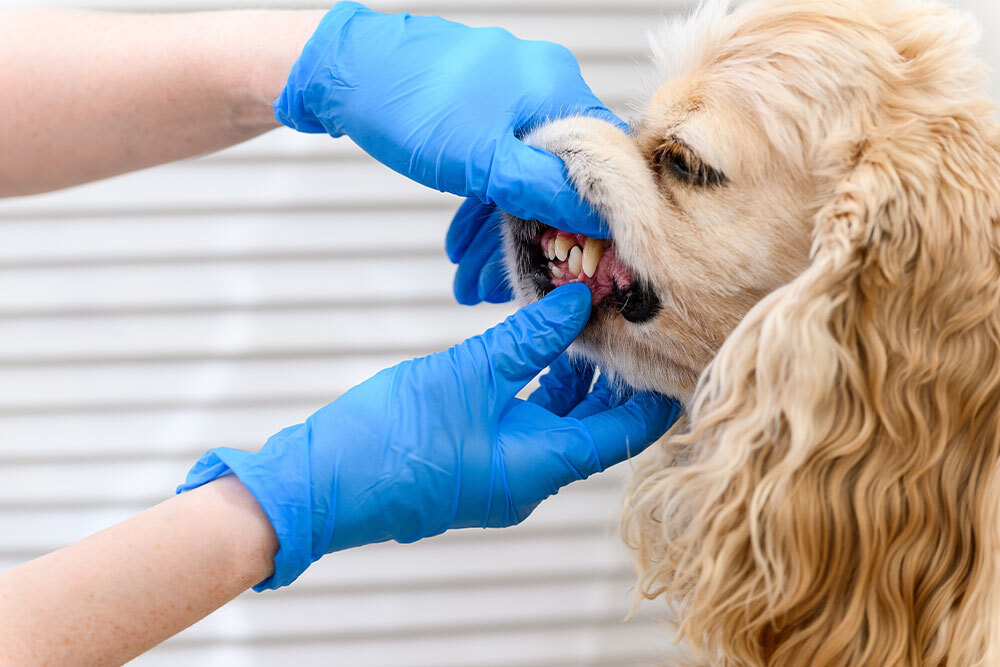
Routine preventive care is far less involved and expensive than treating advanced disease. Dental X-rays are what make early detection possible, since most of the damage happens below the gumline where nothing is visible to the naked eye.
What Does a Professional Dental Cleaning Actually Involve?
A professional veterinary dental cleaning is done under general anesthesia, which is the only way to do the job properly. While that might sound intimidating, pre-anesthetic bloodwork and continuous monitoring make it very safe for healthy pets. Without anesthesia, thorough cleaning simply cannot be done safely, and a conscious pet cannot hold still long enough for thorough work.
A proper cleaning, as outlined by veterinary dental procedure standards, includes:
- Scaling tartar above and below the gumline
- Probing each tooth individually for pockets, mobility, and root exposure
- Full-mouth dental radiographs to evaluate what is happening beneath the surface
- Extraction or treatment of any teeth that cannot be saved
Professional cleanings belong at your veterinarian’s office as a regular part of your pet’s healthcare plan. How often depends on your individual pet, your vet is the best person to advise on frequency.
What Really Works for Preventing Plaque at Home?
Here is the honest answer: consistent at-home habits combined with regular professional cleanings can dramatically slow periodontal disease and protect your pet’s comfort for years. The shelves full of dental products can feel overwhelming, but the fundamentals are more straightforward than the marketing suggests. And it is never too late to start.
Can You Teach a Reluctant Pet to Accept Toothbrushing?
Yes, but patience is the whole game. The most common mistake is moving too quickly, which creates resistance that is genuinely hard to walk back. The goal in the early stages is not a thorough cleaning. It is simply building a positive association with having the mouth handled. When we provide tooth brushing at The Wagging Club, we move slowly and reward cooperation- we don’t want your pet to become afraid of a toothbrush.
Start with gentle touching of the muzzle and lips with lots of rewards. Gradually work toward touching the teeth and gumline, then introduce pet-safe enzymatic toothpaste on your finger. (Human toothpaste contains fluoride and xylitol, both toxic to pets, so never use it.) Cooperative care techniques that build voluntary participation through gradual exposure and positive reinforcement translate extremely well to dental training. Oral hygiene kits with both a finger brush and a standard toothbrush give you options as you work toward fuller coverage. Even sessions covering just the front teeth count.
How Do You Brush a Dog’s Teeth Correctly?
When brushing dog teeth, position yourself beside or slightly behind your dog rather than directly in front, which can feel confrontational to them. Angle the brush at about 45 degrees toward the gumline and use small circular motions, working from front teeth to back molars. The outer surfaces of the upper teeth are the priority since that is where tartar accumulates fastest. Inner surfaces are a bonus if your dog tolerates it, but saliva naturally does more rinsing there.
How Do You Brush a Cat’s Teeth?
Brushing cat teeth calls for a different approach entirely. Cats have more sensitive gum tissue and considerably less patience for having their mouths handled, which will surprise no one who has ever owned a cat. Use a finger brush or cat-specific toothbrush, support the head gently from above rather than gripping the jaw, and focus on the outer surfaces of the canine teeth and cheek-side premolars. Starting with 15-second sessions and building from there works far better than pushing for thoroughness before your cat is comfortable.
Do Dental Wipes Work If Your Pet Refuses a Toothbrush?
They are not as effective as brushing, but they are meaningfully better than nothing. Dental wipes or gauze wrapped around a finger provide mechanical friction to remove soft plaque along the outer surfaces, and many anxious dogs and cats tolerate them far better than a toothbrush. Rub gently along the gumline and sweep outward in short strokes.
Pairing wipes with an enzymatic toothpaste improves results considerably. If tartar is visibly building up or breath is not improving despite regular use, that is a signal to schedule a professional veterinary exam.
What About Enzymatic Gels, Dental Powders, and Water Additives?
These products all work by chemically disrupting bacterial biofilm rather than relying on mechanical scrubbing. Gels can be applied with a brush or finger, and some can be placed in water or food. Powders mix into meals, which makes them practical for pets who resist anything near their mouths. Water additives are the lowest-effort option. Introduce them gradually so your pet keeps drinking normally. These products work best as part of a broader routine rather than as a standalone fix.
Are Dental Chews Worth Using?
Yes, with caveats. Chewing promotes mechanical plaque removal, but hardness matters. If you cannot leave a dent in a chew with your fingernail, it is likely too hard and can fracture teeth. Antlers, raw bones, hooves, and hard nylon chews are all in the dangerous chew items category regardless of how they are marketed. Safe chew toys should flex slightly, match your pet’s weight range, and get replaced when they become small enough to swallow. Dental chew toys with ridged or grooved surfaces become more effective when paired with a small amount of enzymatic toothpaste.
Do Dental Diets Help?
Some prescription and over-the-counter diets are specifically formulated to reduce plaque buildup through kibble texture and size that create a mild abrasive effect during chewing. Dental diets are a meaningful supportive tool, but they do not replace brushing or professional cleanings. Whether one would benefit your individual pet is worth discussing with your veterinarian, since breed, age, and existing dental health all factor in.
What Is the VOHC Seal and Why Does It Matter?
The Veterinary Oral Health Council independently evaluates dental products based on clinical data and awards acceptance to those that demonstrate measurable reductions in plaque or tartar. The seal can appear on chews, diets, wipes, gels, and rinses.
A product without the seal is not automatically ineffective, but looking for VOHC-accepted products is one of the most reliable ways to cut through the marketing noise. The full list spans multiple product categories and is updated regularly.
Brands Worth Paying Attention To
The brands in this list are either VOHC-approved, or have products that are trusted by veterinary professionals to be effective.
| Wide Range of Products (Dogs and Cats) | Water Additives (Dogs and Cats) |
| Vetradent Dental Care | HealthyMouth |
| VetriScience Dental Supplements | TropiClean Fresh Breath |
| ProDen PlaqueOff Products | Bluestem Water Additive |
| CET Dental Line (Virbac) |
How The Wagging Club’s Dental Care Fits Into All of This
This is where we come in between your pet’s professional veterinary cleanings. Our teeth brushing add-on provides gentle manual cleaning and brushing to disrupt soft plaque before it hardens into tartar, and it is available whenever your pet is already in for daycare, boarding, or grooming services. The more frequently plaque gets disrupted, the slower tartar accumulates, and the better your pet’s mouth stays in between professional visits. That means fewer professional cleanings under anesthesia, decreased risk of infections that cause pain and internal organ stress, and lower veterinary care costs in the long run.
The practical upside: your pet is already here. Adding a teeth brushing does not require a separate appointment or extra drive. You pick them up with fresher breath, and you have done something genuinely useful for their long-term health.
Signs Your Pet May Need a Veterinary Dental Exam
Between professional visits and our regular teeth brushing service, watch for:
- Bad breath that is noticeably worse than usual
- Pawing at the mouth or rubbing the face along furniture
- Chewing on one side or dropping food
- Reluctance to eat hard food or pick up chew toys
- Visible yellow or brown buildup along the gumline
- Red, swollen, or receding gum tissue
- Facial swelling, particularly below the eye
- More drooling than usual
Any of these is worth a call to your veterinarian. Dental pain affects quality of life in ways pets cannot tell you about, and getting it evaluated promptly is always the right move.
Frequently Asked Questions About Pet Dental Care
How often should I brush my pet’s teeth?
Daily is ideal, but four to five times a week still provides real benefit. Consistency matters more than perfection. Any regular disruption of plaque slows the progression to tartar.
How can I tell if my home care routine is making a difference?
Improved breath, pinker and less inflamed gum tissue, and reduced visible plaque are all good signs. Persistent bad breath or ongoing gum redness despite consistent home care means a veterinary dental exam is the right next step.
How often should I add the teeth brushing to daycare or grooming visits?
As often as you can manage. Many pet families add it to every grooming visit. If your pet boards with us regularly or attends daycare, adding it to each visit makes a meaningful difference in their long-term oral health.
My pet is sensitive about having their mouth touched. Can they still get a teeth brushing with The Wagging Club?
Let us know when you book. We work gently and at your pet’s pace, and many pets become noticeably more comfortable with regular handling over time. Starting with shorter introductory sessions often helps build that tolerance.
Building Lifelong Dental Health, One Visit at a Time
The best dental care plan is the one you can actually stick to. Whether that looks like daily brushing, a combination of wipes and dental chews, a dental diet, or gradually working toward a brushing routine, any consistent effort makes a real difference in your pet’s comfort and long-term health.
Adding a teeth brushing to your next visit is a simple place to start. Request a service online, or contact us at 813-692-6655 to add it to an existing reservation. Our team is here Monday through Friday 7am to 7pm and weekends for pickups and drop-offs.