
Home grooming has a learning curve, and the mistakes made along the way range from mild, like uneven scissor work that requires a creative explanation, to genuinely problematic, like using human shampoo that disrupts a dog’s skin barrier or skipping the ear dry after a bath and setting up the conditions for an infection. The most common grooming errors can result in real problems: skin rashes, bleeding toenails, damaged hair that won’t grow back right, or fur matted tightly and painfully to the skin.
At The Wagging Club in Tampa, we see the consequences of DIY grooming regularly and genuinely enjoy helping you do it better at home between appointments. Whether your pet needs a full groom, a nail trim, or guidance on a home routine that actually works for their coat type, our spa services are built for exactly that. Contact The Wagging Club to schedule an appointment or ask about home care for a specific breed or coat type.
Grooming Is Preventive Care, Not Just Cosmetics
Regular grooming removes dirt, debris, and loose hair, distributes natural oils, and reduces the accumulation of environmental allergens that are especially problematic in Florida’s pollen-heavy seasons. In Tampa’s heat and humidity, a matted or dirty coat traps moisture against the skin and creates conditions where bacteria and yeast can thrive.
Grooming incorrectly can set you up for matted coats, overgrown or quicked toenails, ear infections, or coats that grow back not-quite-right. Knowing the difference between what you can do at home and what you should do at home can make an enormous difference in your pet’s health and comfort. Our fabulous groomer, Megan, can answer all your questions and help your pet look- and feel- their best. Reach out to schedule a spa day.
Should You Shave Your Dog? It Depends on the Coat
Double-Coated and Wire-Coated Breeds
A double coat has a dense, insulating undercoat beneath a longer protective outer coat. Huskies, Golden Retrievers, Bernese Mountain Dogs, and Shelties are common examples. The coat does two jobs: it insulates against cold in winter and, counterintuitively, protects against heat and UV rays in summer by circulating air across the skin. Shaving your dog disrupts that function entirely and exposes the skin directly to sun and heat. There is also the risk of post-clipping alopecia, where the coat grows back altered in texture, color, or thickness, sometimes permanently. Wire-coated breeds like terriers and schnauzers face a similar issue: clipping destroys the harsh outer texture that defines the coat, and it does not reliably return. The solution for overheated double-coated dogs is not a shave; it is regular deshedding, shade, and hydration.
When Is Shaving a Cat Appropriate?
Cats groom themselves efficiently and rarely need shaving under normal circumstances. The situations where it is genuinely warranted include severe cat grooming challenges like matting that cannot be safely brushed out, a medical procedure requiring skin access, or a condition requiring topical treatment. The lion cut is popular for long-haired cats, and while it is not harmful when the cat tolerates it well, it is not necessary for temperature regulation or coat health in most healthy cats.
Are Breed-Standard Cuts Required?
Breed-standard cuts, like the Poodle continental clip or Schnauzer banding, originated in working function and are now largely tradition. They are not required for pets who are not being shown. There is a wide range of dog grooming styles available, and the right choice is simply one that keeps the coat comfortable, clean, and mat-free. Creative cuts, dye jobs, and novelty styles are largely a matter of preference.
Feeling like your Doodle needs a mohawk? We’re here for it. Want your Cocker Spaniel to rock a mullet this month? Bring it on. Frosting your Bichon’s tips neon pink? Let’s do it.
The main considerations are whether the pet tolerates the process comfortably and whether any dye or product used is pet-safe. The only grooming style that is genuinely problematic is one that causes distress or compromises coat and skin health. At The Wagging Club, we offer pet-safe fur dyes, custom cuts, and even toenail polish if you’re feeling funky.
Are You Using the Right Brush?
Using the wrong brush for your dog’s coat type is one of the most common reasons home grooming does not actually work, even when the effort is there. A slicker brush is great for removing loose hair and light tangles from most coat types, but it barely touches the dense undercoat of a double-coated dog. For those breeds, an undercoat rake or deshedding tool is what actually reaches the layer where shedding and matting happen.
Curly and wavy coats like Doodles and Poodles need a pin brush or a slicker with flexible pins to get through without breaking the curl. Fine-toothed combs are essential for finishing work and catching small tangles before they tighten. If you are brushing regularly and still seeing mats or excessive shedding, the tool is usually the issue. Ask us what we use and recommend for your dog’s specific coat at the next appointment.
What Happens When Grooming Is Delayed Too Long: Matting
Matting begins as brushable tangles and tightens into dense clumps that pull on the skin- and it can be painful. In severe cases, the skin beneath becomes irritated, moisture and bacteria become trapped, and circulation can be restricted. Long-haired breeds, doodles, and double-coated dogs during shedding season are most at risk. Waiting too long between professional grooming appointments is one of the fastest ways to end up in mat territory. A schedule that works for your dog’s coat type, whether that’s every four weeks for a Doodle or every eight to ten for a shorter coat, makes a meaningful difference in what we are able to do when you come in. These grooming challenges are almost entirely preventable with consistent brushing between appointments.
The key is brushing through the coat in sections rather than skimming the surface, since mats typically form underneath, behind the ears, under the collar, in the armpits, and around the hind legs. Never try to cut out a mat with scissors; the skin beneath often sits much closer to the mat than it appears. If the coat has progressed to pelting, shaving is the only humane option, and preventing it starts well before that point. We offer both deshedding and dematting services to prevent and fix this problem.
Nail and Paw Care: What Gets Missed
Overgrown nails alter the way a pet distributes weight across their paw, placing long-term stress on joints. The quick, the blood vessel inside the nail, grows longer as the nail grows, making it progressively harder to trim back to a healthy length without hitting it. If you’ve waited too long between toenail trims, there’s a good chance we can’t cut them short- but getting back to a regular cadence of trimming can help push the quick back again, so it’s not a hopeless situation. It just takes work. Nail grinding can also be useful in these situations.
Broken or torn nails are painful, prone to infection, and often require veterinary care. In dogs with heavily feathered feet, attention to grooming feet and paws includes trimming the hair between the toes flush with the pad, which prevents matting, debris collection, and loss of traction on slick surfaces. In Tampa’s summer heat, paw protection during midday walks matters, and pads should be checked regularly for softening, cracking, or redness. We love paw wax for dry, cracked paw pads and for environmental protection. Ask us to add nail grinding and paw wax to your dog’s next grooming appointment!
Should You Pluck Your Dog’s Ear Hair?
Ear hair plucking is one of the most debated practices in grooming. It was historically recommended to improve airflow in drop-eared breeds prone to ear infections, or with heavy ear-canal hair (like Poodles), but the reasoning has since been questioned: plucking creates micro-abrasions in the canal that can invite bacterial or yeast growth, potentially worsening the problem it was meant to prevent.
Dogs with a history of chronic ear infections whose veterinarian has specifically recommended plucking may be different cases. For most dogs: if there is no ear disease, ear hair plucking is unnecessary. Ear hair trimming and ear cleaning, however, is a good idea. We can tackle all of that, and give our recommendation on whether or not ear hair plucking is a need for your dog.
Tear Stains: More Than a Cosmetic Issue
Tear stains are caused by porphyrin pigments in tears and are most visible on light-coloured pets. They are worth taking seriously rather than masking. Medical causes to rule out before any cosmetic treatment include blocked or abnormal tear ducts, entropion (eyelids that roll inward), eye infections, allergies, and dental disease putting pressure on tear ducts. Many OTC tear stain supplements have historically contained low-dose antibiotics not approved for this use, which contribute to antibiotic resistance and are not a safe long-term solution.
Proper technique for cleaning your pet’s eyes matters, and staining that recurs quickly after cleaning is a sign something medical needs to be addressed. We can provide face trims between full grooming appointments to help keep the fur out of your pet’s eyes, and use a blueberry facial to reduce the staining from tear collection.
Using the Right Shampoo
Human shampoos are formulated for a skin pH between 4.5 and 5.5; dogs have a skin pH between 6.2 and 7.4. Using a human shampoo disrupts the natural acid mantle of the skin, stripping protective oils and creating conditions favourable to bacteria and yeast overgrowth. Cats are even more sensitive to topical products, and some ingredients common in human or dog products, including tea tree oil and permethrin, are outright toxic to cats. We have a few shampoos and conditioners to choose from, depending on your pet’s particular needs and coat type.
Anal Glands: Who Actually Needs Expression?
Anal glands are two small sacs on either side of the anus that normally express on their own when a dog or cat defecates. Signs that they may be full or impacted include scooting, licking or biting at the base of the tail, a fishy odour, or visible swelling. Anal gland expression at every grooming appointment is not universally recommended. For dogs whose glands function normally, routine manual expression may interfere with the natural process over time. Dogs with recurrent anal gland issues benefit more from a veterinary investigation into the underlying cause, including diet, stool consistency, and anatomy, than from indefinite manual expression.
That being said, for pets who need a little extra help, an anal gland expression from our Wagging Club team can help make sure that your pet stays comfortable and that you don’t get that oh-so-gross anal gland goo on your couch.
Red Flags to Bring to the Vet
Running your hands through a coat during a brushing session is how many families first notice a new lump, a hot spot forming, or unexplained thinning. DIY health checks during grooming sessions can surface changes in skin texture and body condition that a vet visit several months away would otherwise miss.
Problems to Tell Your Vet About:
- Unexplained hair loss or bald patches
- New lumps, bumps, or skin growths
- Open sores, hot spots, or wounds
- Persistent itching, odour, or discoloured skin
- Tear staining that appears suddenly or has worsened
- New sensitivity to grooming a body part
- Gums that bleed or staining on the teeth that persist after tooth brushing
Parasite Pressure in Florida
Year-round parasite pressure in Florida means grooming and prevention need to work together. Flea allergy dermatitis is common here, and a single flea bite can trigger an intense reaction in sensitive pets. Bathing after outdoor exposure and running a flea comb through the coat regularly helps catch infestations early, but year-round parasite prevention is essential. Not all flea preventatives are created equal, so if you see fleas and you are using a preventative flea medication, let your vet know. They can switch you to something better.
It’s Always Allergy Season in Tampa
Tampa’s allergy season never quits. Allergy symptoms in dogs often show up as itchy skin, recurrent ear infections, or paw licking. Regular bathing can reduce flare-up severity by removing environmental pollen and allergens, and routine ear cleaning can help prevent infection in inflamed ears. Persistent itching despite good grooming habits is a veterinary conversation, not a grooming fix, so chat with your vet if your pet is still miserably itchy even after a good bath.
If we notice anything out of the ordinary during a grooming session, we’ll let you know.
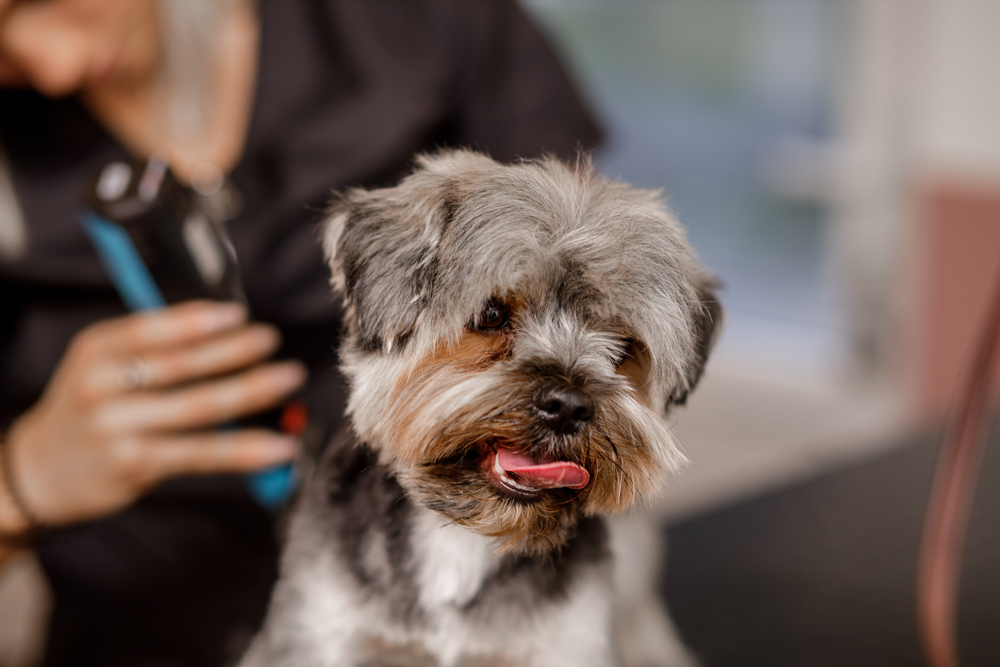
Frequently Asked Questions About Pet Grooming
Can I use my own shampoo on my dog in a pinch?
No. Human shampoos disrupt your dog’s skin pH even with a single use. A plain water rinse is a better option until you have the right product.
How often should I brush my dog between appointments?
It depends on the coat. Long-haired, curly, or double-coated breeds may need brushing several times a week to prevent matting. Short-coated breeds need it less frequently. Regular brushing also catches skin issues early.
Should I clean my dog’s ears at home?
Routine cleaning with a veterinarian-recommended cleaner is appropriate for many dogs. Cotton swabs, wrong solutions, or excessive frequency can cause irritation. Head shaking, scratching, odour, or discharge are medical concerns, not grooming ones.
Do all dogs need their anal glands expressed?
No. Many dogs express them naturally. Dogs who scoot, lick at the tail base, or have recurrent issues should be seen by a veterinarian rather than simply scheduled for more frequent expression.
Are lion cuts harmful to cats?
Not typically, as long as the cat tolerates the process well and is kept warm during recovery. The coat grows back, though texture changes are possible.
Your Dog Deserves a Great Grooming Experience
Good grooming is about more than a clean coat. It is about keeping your dog comfortable, catching small issues before they become big ones, and making sure the experience is something your dog can actually tolerate, maybe even enjoy. Most grooming problems come down to the wrong products, the wrong tools, or not enough consistency between appointments, and all of those are fixable.
At The Wagging Club, Megan and the team genuinely love what they do, and it shows. From full grooms and blowouts to nail grinding, paw wax, blueberry facials, and pet-safe fur color, our spa services are here for every dog and every coat type. Book an appointment and let us take it from here.