

It’s natural to wonder if putting your pet through elective surgery is truly necessary. For most pets, yes: spaying or neutering is one of the most protective choices you can make. It prevents multiple life-threatening health problems, and quiets the marking, mounting, roaming, and heat-cycle restlessness that hormones drive. It also opens doors, because most group daycares, boarding facilities, and dog parks require pets to be altered before joining the pack. Still, "necessary" comes with real exceptions. Veterinarians now recommend waiting on many large-breed dogs so their joints can finish growing, and breeding or show homes keep pets intact on purpose. The decision belongs to you and your veterinarian. What it shouldn't cost your dog is a social life.
That's where The Wagging Club in Tampa comes in. Dogs who aren't spayed or neutered, whether surgery is still on the calendar or your veterinarian has recommended waiting, get a full day of their own through our private daycare, with one-on-one playtimes and walks built into the day. Overnight, private care boarding keeps that same personal attention, and add-ons like 1:1 pool time and individual toy tossing sessions send even energetic pups home happily tired. If your pet is intact and you have a trip coming up or just need them entertained while you're at work, ask us about private care and we will talk through what fits.
The Short Answer on Spaying and Neutering
- For most pets, spaying or neutering is worth it, preventing diseases only intact pets get and easing hormone-driven habits like marking, roaming, and spraying.
- Waiting can be the right call for large-breed dogs, and your veterinarian is the one to set the date based on breed, size, and growth.
- Intact dogs can't join group play because hormones change the chemistry of the whole pack, but private daycare and boarding give them a full day of their own.
- Most pets can return to playtime about fourteen days after surgery, once the incision has healed and their veterinarian gives the all-clear.
Is Spaying or Neutering Really About More Than Preventing Litters?
Preventing litters is the part everybody knows. The bigger return is a pet who sidesteps several painful reproductive diseases, carries less hormone-driven stress, and is far less likely to slip a gate chasing a scent. Veterinarians count these surgeries as core preventive care, right alongside vaccines and parasite prevention.
Intact pets take risks that altered pets simply don't. A male dog who picks up the scent of a female in heat will dig, climb, and chew through a screen door to get there, and Dale Mabry traffic doesn't slow down for a dog on a mission. Tomcats fight over territory, and those punctures turn into abscesses that need draining. Take away the hormonal drive and you take away many of the reasons pets end up lost, injured, or at an emergency hospital on a Saturday night. The Humane Society of Tampa Bay offers affordable spay and neuter services for Hillsborough and Pinellas County to help prevent the pet overpopulation and lost dogs and cats that fill their shelters.
There's a social side too. Group play at daycares, boarding facilities, and dog parks is nearly always limited to spayed and neutered dogs, so an intact pet often has fewer options for social time and boarding, though not here at The Wagging Club.
How Do Spaying and Neutering Protect Long-Term Health?
The clearest protection is against diseases only intact pets can develop. Cancer risk shifts too, and the pattern differs by sex:
- For females: Pyometra fills the uterus with infection in the weeks after a heat cycle, and in an unspayed female it becomes emergency surgery in a matter of hours rather than a problem antibiotics can fix. About 25% of unspayed pets over the age of 10 will develop this infection. Roughly half of mammary tumors in dogs turn out to be malignant, and the protective effect of spaying is strongest when it happens before the first few heat cycles. Mammary tumors in cats are less common but tend to behave more aggressively, so early spaying matters even more.
- For males: Testicular tumors rank among the most common cancers in older intact males, and neutering takes that possibility off the table completely. A testicle that never dropped carries a considerably higher cancer risk than one sitting where it belongs, and neutering removes it. Straining to pass stool, blood in the urine, and a stiff, hunched walk later in life often trace back to prostate problems, and the gland typically shrinks back down within weeks of neutering.
If your dog or cat is already grown and still intact, that's not a missed window. Surgery later still removes the biggest risks, and your veterinarian can weigh anesthesia, age, and health history with you before picking a date.
What Behavior Changes Can You Expect After Surgery?
Roaming, mounting, and territorial marking are hormone-driven habits rather than personality traits, which is why spaying and neutering tend to soften them in the weeks after hormone levels drop. Females stop cycling, so the pacing, crying, and general restlessness that come with heat go away with it.
Cats show the difference fastest. Urine spraying shows up far more often in intact cats, and most stop or sharply cut back after surgery, which is frequently the difference between a cat who uses the litter box and one who has claimed the hallway.
Male dogs calm down in ways that are easy to notice. Fence-jumping, door-dashing, and the leg-lift tour of the living room usually taper off over a few weeks. Scuffles with other males get less frequent, though training and good management still matter, since surgery lowers the drive without teaching manners. What doesn’t change is your pet’s core personality.
Why Can't Intact Dogs Join Group Play?
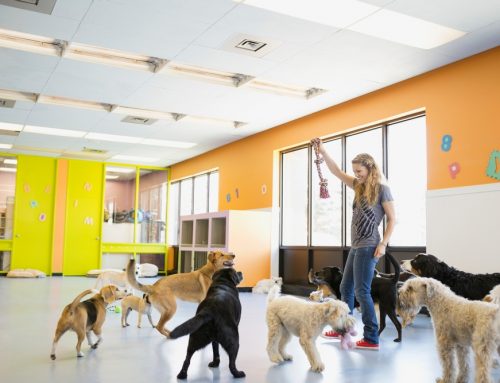
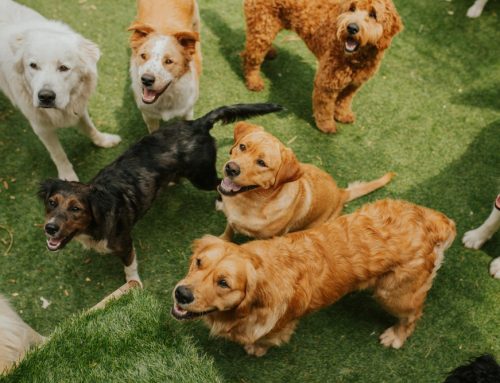
Intact dogs sit out group play because hormones change how the whole pack behaves, not because they're bad dogs. A female in heat can raise the tension in an entire room, and intact males draw mounting and posturing behavior even if they start none of it. Altered-only groups keep play predictable and safe for every dog in them.
Estrus scents and testosterone work on a play group the way a fire alarm works on an office: everything else stops. Other dogs fixate, compete, and crowd, and even the sweetest intact dog ends up at the center of a swirl they never asked for. That's why our supervised group play is altered-only for pets over six months of age.
None of that means an intact dog misses out here. Private daycare and boarding is a real experience, not a consolation prize: each day includes one-on-one play sessions, an individual walk, and staff attention that never has to be split with a pack. Individual toy toss, pool time, splash pad play, extra walks, and frozen treats can all be added for even more fun. It fits large-breed puppies whose veterinarian wants growth plates closed first, pets with health conditions that prevent surgery, and intact adults in breeding or show homes who will never be altered at all. If that's your dog, tell us about them and we'll build a day around them.
When Is the Right Time, and What If Your Veterinarian Says to Wait?
Timing depends on species, adult size, and how your individual pet is growing, which is why your veterinarian sets the date during a regular exam rather than by the calendar. Cats and small dogs are often spayed or neutered between eight weeks and six months, while waiting past a year is now common advice for large breeds. A dog or cat can become pregnant as early as four months of age, making close supervision critical before they are spayed.
What's the Right Age for Cats, Small Dogs, and Large Breeds?
Age recommendations split along growth rate more than anything else. A Great Dane and a Chihuahua move through their life stages on completely different clocks, with growth plates closing months apart, which is why a single age rule can't cover every dog.
| Pet | Commonly recommended timing | Why |
| Cats, male and female | Between two and six months, before a first heat | Prevents early pregnancy and spraying habits that stick |
| Small-breed dogs | Around 6 months | Skeletal growth finishes early, so waiting adds little benefit; prevents marking habits that stick |
| Large and giant breeds | Often closer to 12 to 18 months | Research links later neutering with lower rates of certain joint problems |
| Any pet with a health concern | Set individually by your veterinarian | Heart, thyroid, and orthopedic findings can shift the plan |
Research on large breeds is the reason the old "six months for everyone" advice has softened. Hormones play a part in closing growth plates, so altering a giant-breed puppy very early can leave them taller and looser in the joints. Your veterinarian weighs that against the risk of an accidental litter and the household's ability to manage an intact dog. If surgery is still months out and you have a trip on the calendar, book a stay in private care and your dog is covered either way.
How Soon After Surgery Can Your Pet Return to Playtime?
Most pets are cleared for normal play about fourteen days after surgery, once the incision has sealed and any sutures are out. Until then, running, wrestling, jumping, and swimming all risk opening the repair, so the two weeks in between come down to quiet, leash-only activity and patience.
The cone is the least popular item in the house and the most useful one. A few minutes of licking can undo the whole repair, and too much running turns into a seroma, a soft pocket of fluid under the skin that shows up when a pet moves more than they should. A thin pink line and mild swelling are normal parts of post-operative healing, while discharge, a widening gap, or a soft lump that grows by the day all warrant a same-day phone call.
Keep your pet out of the bath, the pool, and the bay until your veterinarian says the skin has sealed. Once you have that clearance, a full bath and groom washes off two weeks of cone hair and couch rest.
If travel or a workweek lands inside that recovery window, private boarding or daycare works well, since a quiet suite and leashed potty breaks are easy to arrange. Once your veterinarian gives the go-ahead, get back on the schedule and our team will keep those first days back deliberately low-key.
Which Spay and Neuter Myths Still Come Up Most?
Hesitation usually traces back to a few ideas that feel true but don't hold up, plus one fair question about downsides.
Does a Pet Need to Have One Litter First?
Dogs and cats have no concept of parenthood as a life experience, so there's nothing to miss out on. Pregnancy is a physical event for them, not an emotional milestone, and it carries real cost: calcium crashes, difficult deliveries, emergency c-sections, and the drain of nursing a large litter. Letting a female have a heat cycle first also gives up the strongest window of mammary cancer protection.
Will My Male Dog Miss What He's Lost?
Male dogs and cats have no awareness of their reproductive organs and no attachment to them. What they do notice is relief: less pacing at the fence line, less obsessive scent-tracking, fewer fights they didn't want. The discomfort here belongs to the humans in the room, which is understandable, but your dog isn't tracking the change. What he gets instead is a safer life with fewer emergencies in it.
Will Surgery Change My Pet's Personality?
Only hormone-driven behavior shifts. Goofiness, affection, drive to play, food motivation, intelligence, and the bond with your family all sit outside the reproductive system and stay exactly where they were. A dog who greets the door with a toy in their mouth still does that. What fades is the frantic edge, and a calmer pet is a less stressed pet, not a different one.
Do Pets Always Gain Weight After Being Fixed?
Surgery often happens right when the shift from high-growth puppyhood to adulthood begins, which is the main reason metabolism slows. Spaying and neutering does also reduce caloric needs, because estrogen and testosterone do drive energy expenditure. Pets who have their reproductive organs also may be more active from hormone driven behaviors like roaming or pacing when they catch the scent of a dog in heat, which certainly burns calories.
Are There Any Real Downsides to Spaying or Neutering?
A few, and they're worth naming plainly. Anesthesia always carries a small risk, which bloodwork and monitoring keep low. Metabolism slows a bit afterward, so portions may need adjusting. And in some large breeds, altering very early is linked to higher rates of certain joint problems, which is why timing is a conversation with your veterinarian, not a calendar rule. For most pets, the protection on the other side of the scale outweighs all three.
Questions We Hear About Spay, Neuter, and Private Care
Can My Dog Come to Daycare Before They're Spayed or Neutered?
Dogs who aren't fixed yet are welcome here through private care. They can't join the group if they are over six months of age, since intact hormones stir up even well-mannered play groups, but they get their own version of the day: one-on-one playtime and attention, individual walks, and add-ons like pool time or toy tossing. Most dogs come home just as tired.
My Dog Will Stay Intact for Breeding or Showing. Can They Still Stay With You?
Yes. Intact adults are welcome through private daycare and boarding at any age, with one-on-one play sessions, individual walks, and their own quiet suite overnight.
Does My Dog or Cat Have to Be Spayed or Neutered for Grooming at The Wagging Club?
No. We are happy to groom intact pets, as long as females aren’t in heat. Please let us know, and we’re happy to get a time on the calendar after her cycle to make sure she gets a proper spa day.
Fixed or Not, Your Dog Has a Place Here
For most pets, spaying or neutering really is necessary in every way that matters: fewer emergencies, steadier behavior, and more good years together. For the rest, waiting on a veterinarian's advice or staying intact for breeding or showing means a different plan, not a smaller life. Your veterinarian will land on what's right for your pet's breed, size, and health, and The Wagging Club in Tampa will handle the social calendar either way. If a trip or a surgery date is coming up, reach out and we'll build the stay around it.